Scotland in April
Part two of our April trip. Part one is England in April.
April 7
Edinburgh
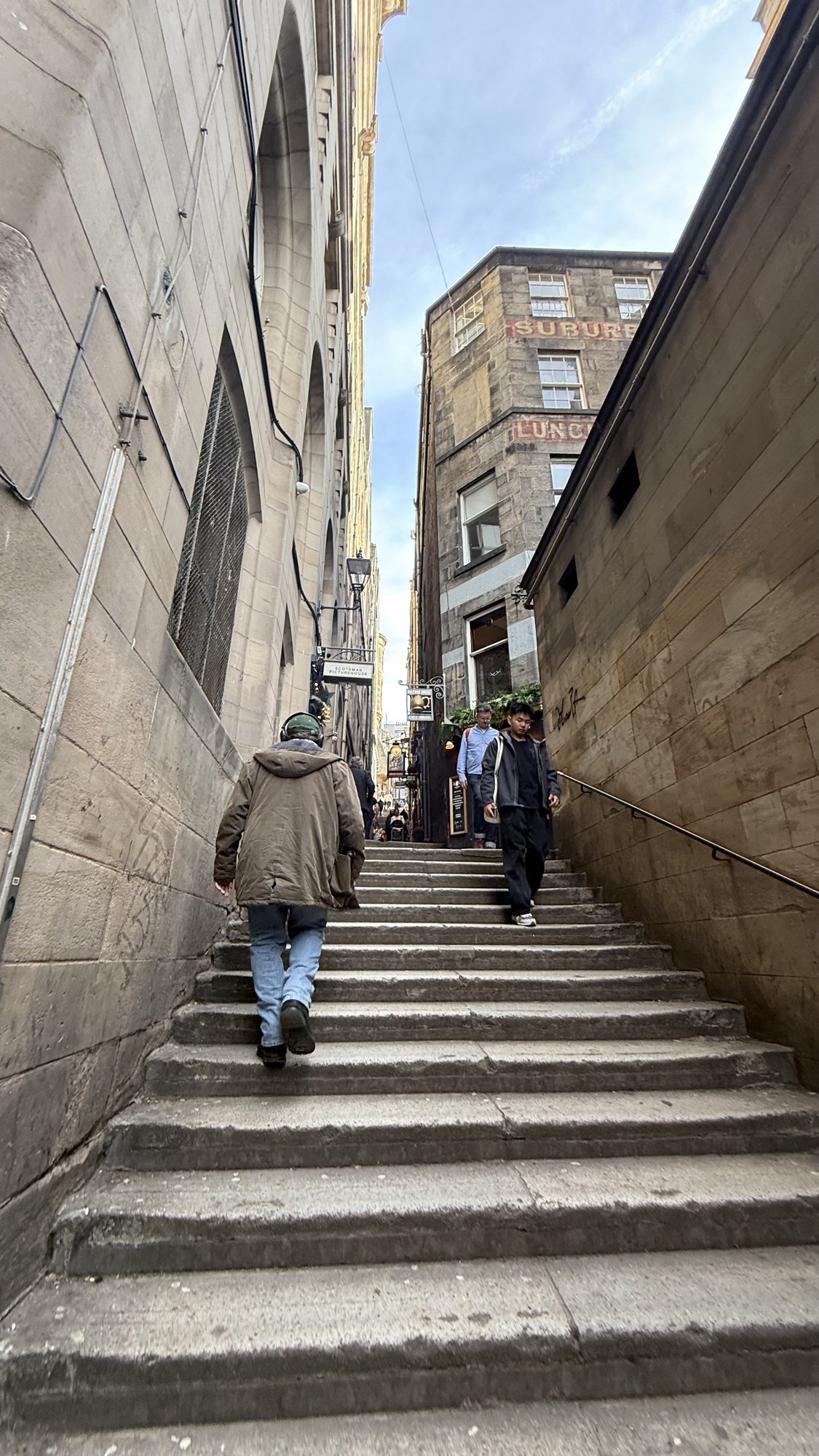
The moment we stepped off the train at Waverley Station, we shouldered our packs and set off toward the Royal Mile. Our introduction to the city was our first close, one of the narrow passageways that weave through Edinburgh’s Old Town. We took Fleshmarket Close, climbing roughly 120 steps up from Market Street.
We were surprised by how steep the closes were and how many of them connect the Royal Mile to the streets below. Many open onto tucked-away restaurants, little businesses and hidden corners, and with the damp stone, shadowy passages and misty air, there was something wonderfully Victorian about it all. We were especially grateful for our backpacks on those steps, though plenty of people were attempting them with rolling suitcases!
At the top, we emerged onto the Royal Mile to a young group of buskers playing bagpipes, guitar and drums. We couldn’t have asked for a better welcome to Scotland.
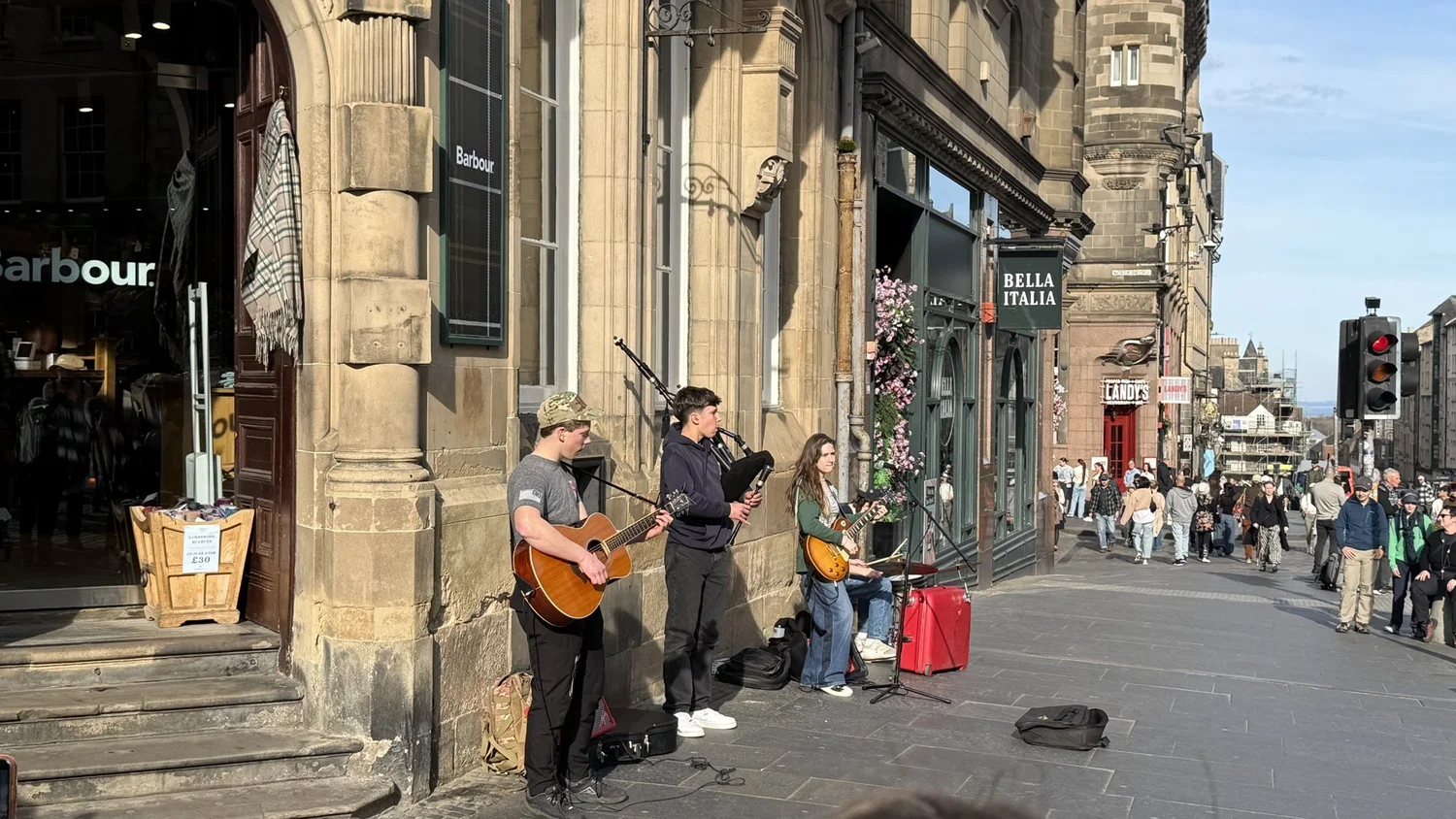
Almost immediately, we were drawn to Edinburgh’s rebellious spirit. The city is steeped in history, just like the places we’d visited in England, but the feeling here was different: an independent, don’t-tread-on-me attitude and a deep Scottish patriotism. As Americans, we found something familiar in that. Countless people wore kilts with leather jackets, which reminded us of American bikers, and we loved the ruggedness and individuality in the way people carried themselves. Of all the places we’d visited so far, Edinburgh felt the most like home.
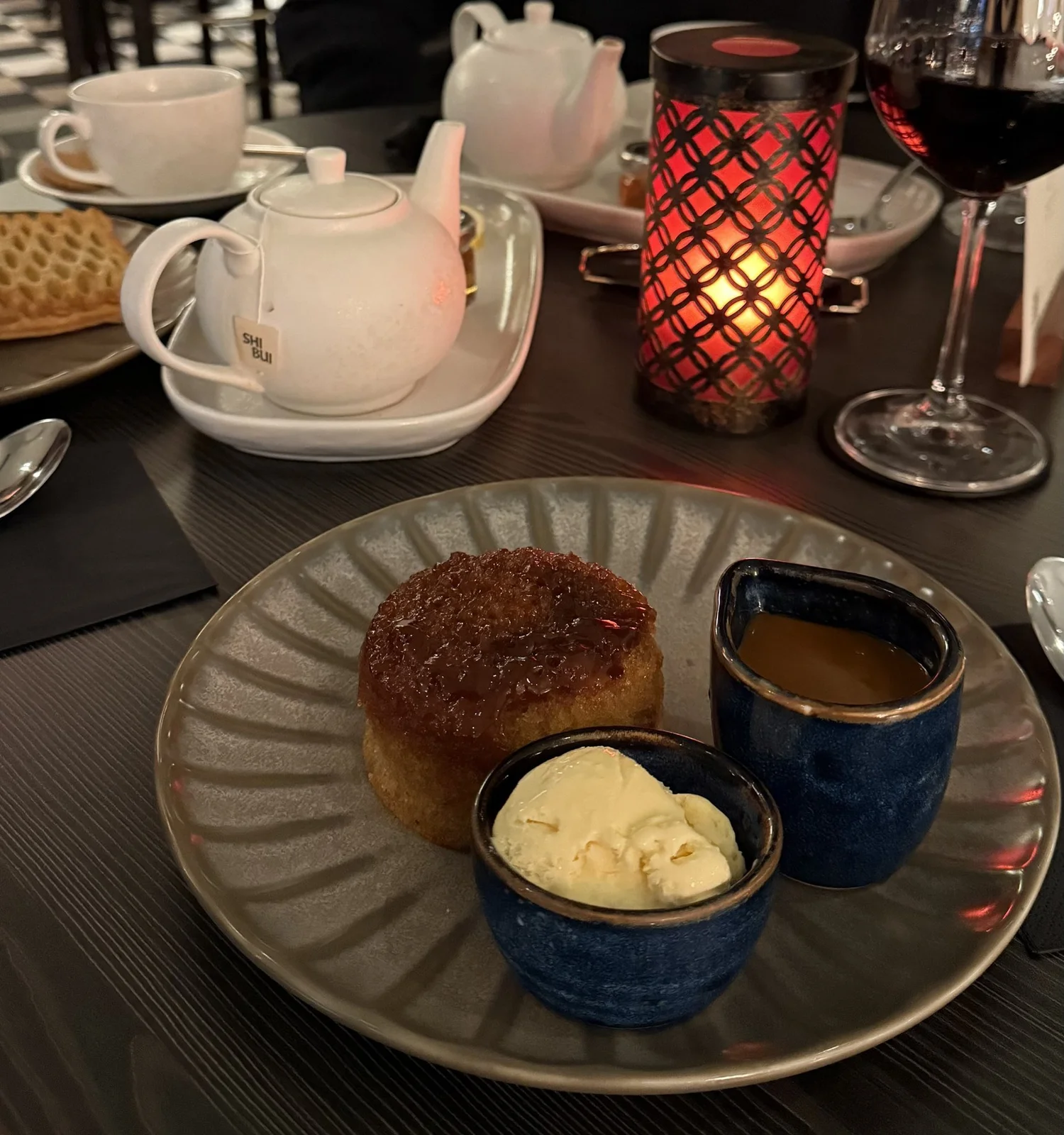
We didn’t have nearly enough time, but we spent the evening wandering the Royal Mile, listening to the buskers and people-watching. And dinner? Our best cup of tea of the trip, and dessert. We were on vacation, after all.
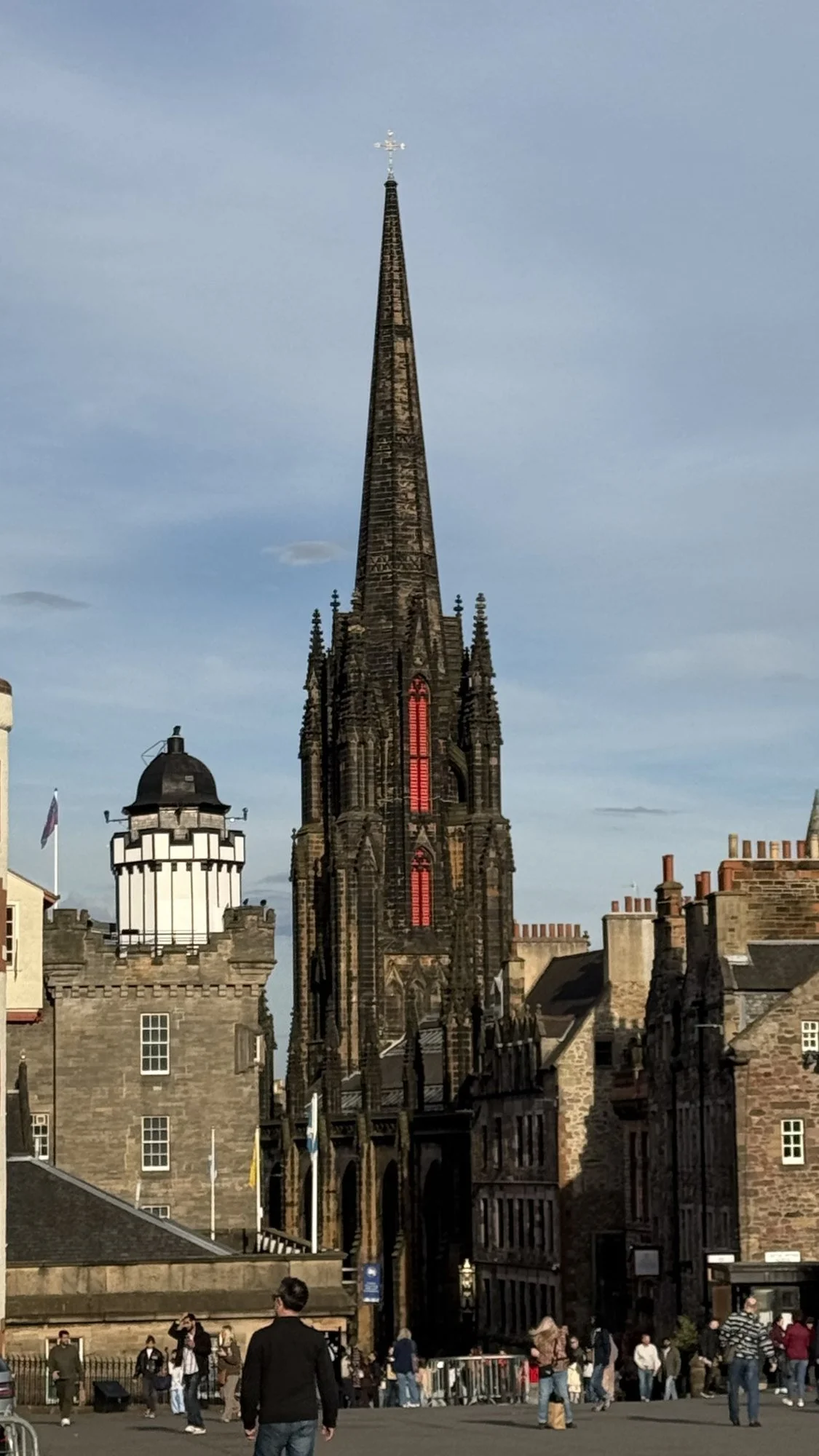
We had only just arrived, but Edinburgh had already found a place in our hearts.
April 8
Edinburgh to Ballater
Up to this point, we’d considered our walk through the Cotswolds the most adventurous day of the trip. We’re comfortable with road trips in the States, so how different could it really be?
As it turns out, we couldn’t have been more wrong.
We expected driving on the left to take some getting used to, but we hadn’t fully considered getting out of Edinburgh: narrow streets, unfamiliar road signs, roundabouts and pedestrians. It was all hands on deck. My husband drove while I navigated, watched the signs and kept repeating, “Move over a little bit!” whenever he instinctively drifted left. More than once, we narrowly missed cars parked along the road.
Once we reached the motorways and open countryside, things got easier, and we could focus on the most important thing: staying on the left!
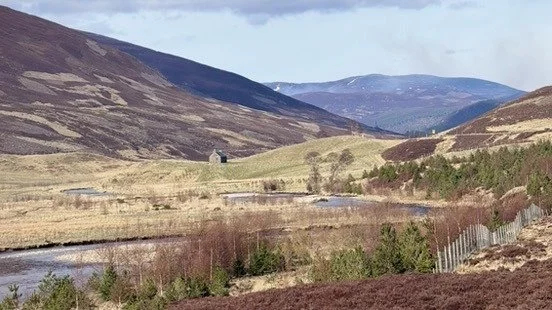
We skirted Stirling and headed into Cairngorms National Park to Ballater, where we’d booked one night in a converted manor with an interesting history involving marmalade. The rooms were spacious, the views beautiful and the trails endless, with Balmoral Castle only about seven miles away. We could easily have stayed several more nights.
April 9
Craigendarroch to Loch Ness
The next morning, we had our first real Scottish hike, up Craigendarroch, the hill overlooking Ballater. The landscape felt both familiar and entirely foreign compared with New England, and I was fascinated by the scrubby undergrowth covering the hillsides. I wanted to stop constantly to take it all in.
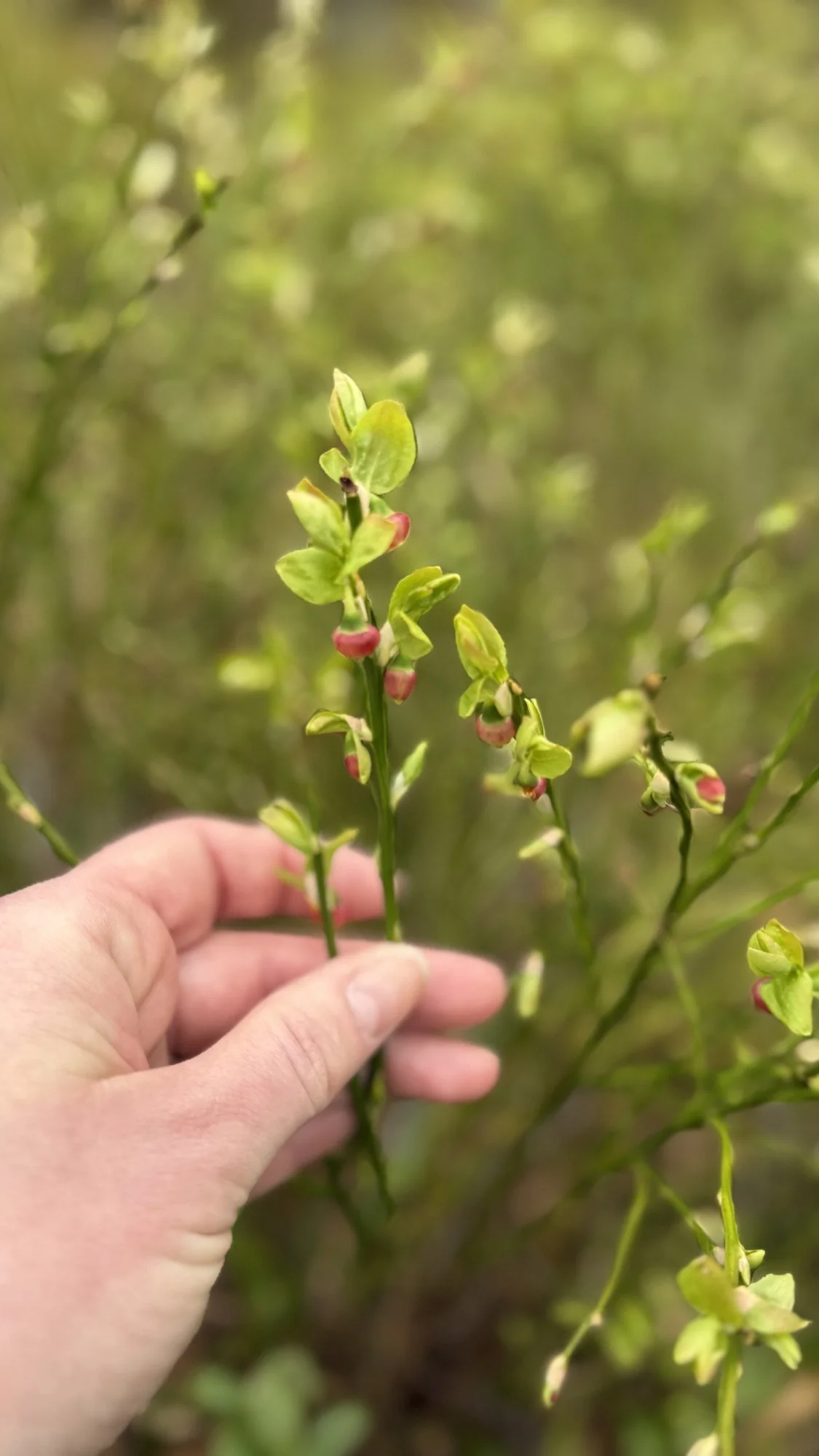
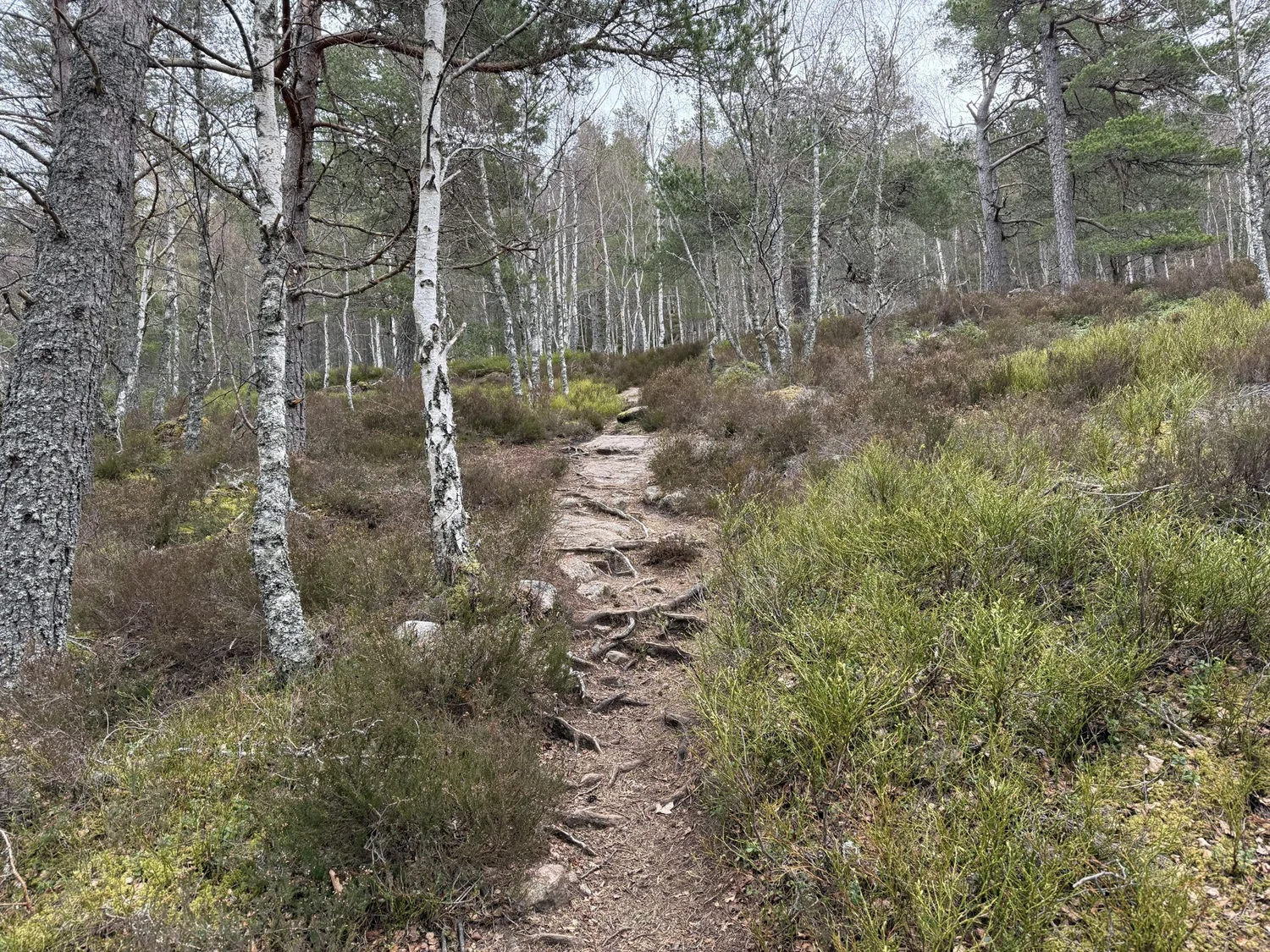
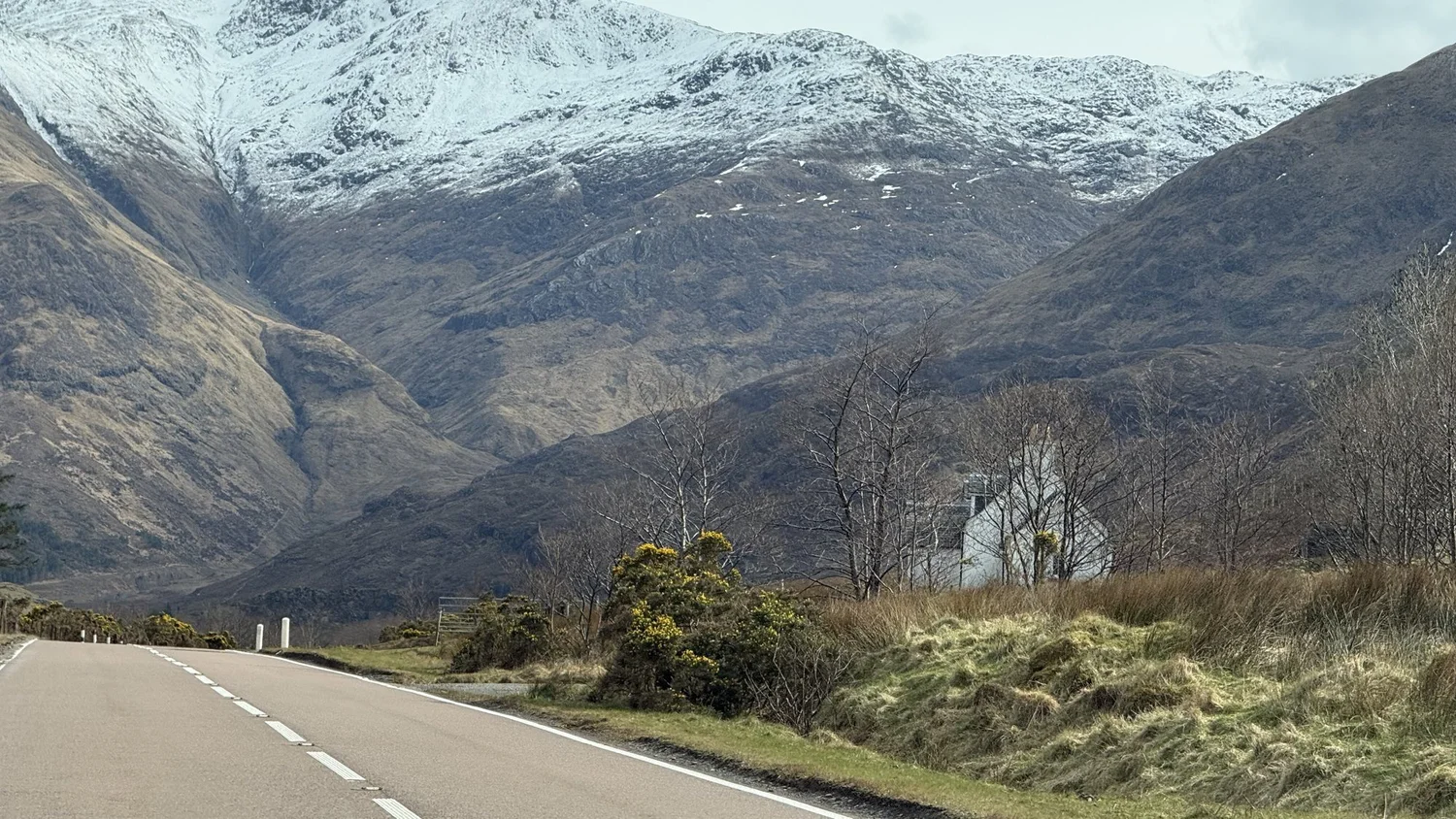
When people ask me what the Highlands were like, the best words I’ve found are epically moody. The landscape seemed almost adolescent in its temperament, shifting from happy and bright to stormy and angry in an instant. One moment the hills were bathed in soft light, and the next, dark clouds swept across them.
In spring, the gorse grew in wide swaths of yellow alongside the dormant heather, still waiting for its turn to bloom. I can only imagine these hills when the heather turns purple in late summer. The rivers and streams were wide open and beautiful, and I couldn’t help daydreaming about coming back someday with a fly rod.
We pulled off the road often to explore small hills, streams and viewpoints, and kept finding plaques marking places connected to the Jacobite rebellions of the 1700s. Scotland seems to have a long memory. Its history isn’t tucked away in a museum; it feels woven into the landscape, and the pride in that heritage is everywhere.
Heading north toward Inverness and then along Loch Ness, we were surprised by how little development there was along such a famous body of water. There was hardly any boat traffic, and long stretches of shoreline felt quiet and remote.
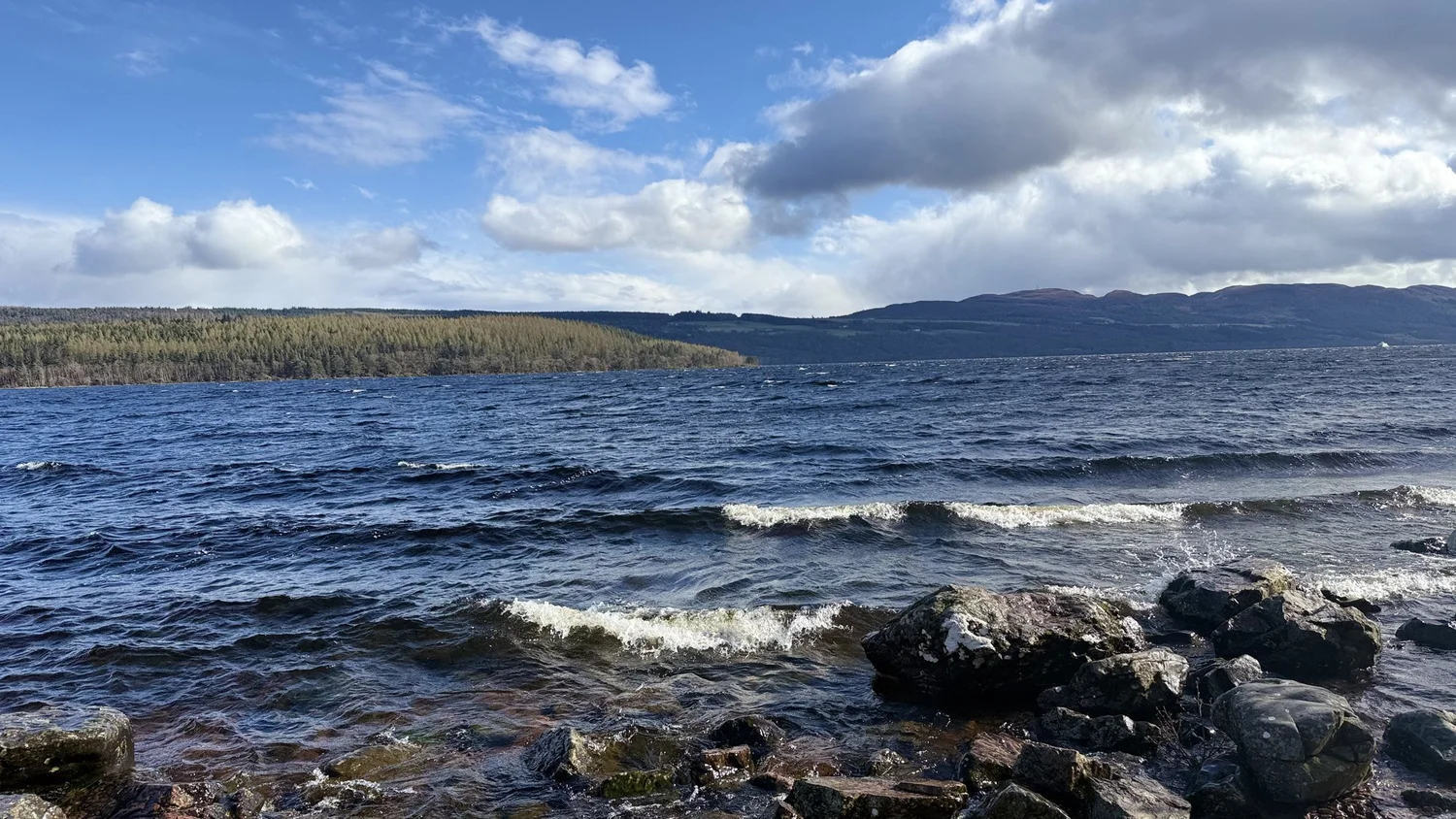
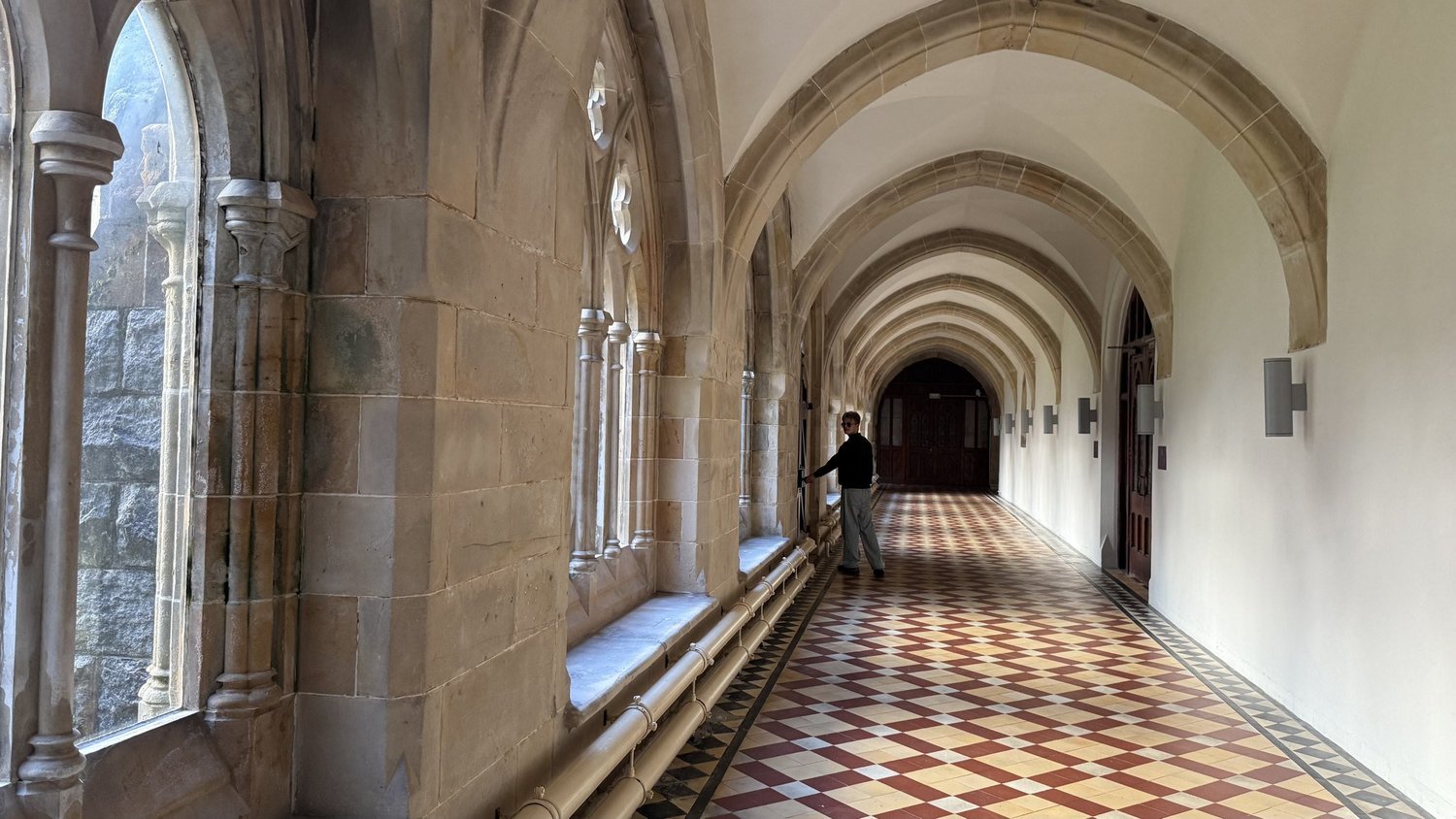
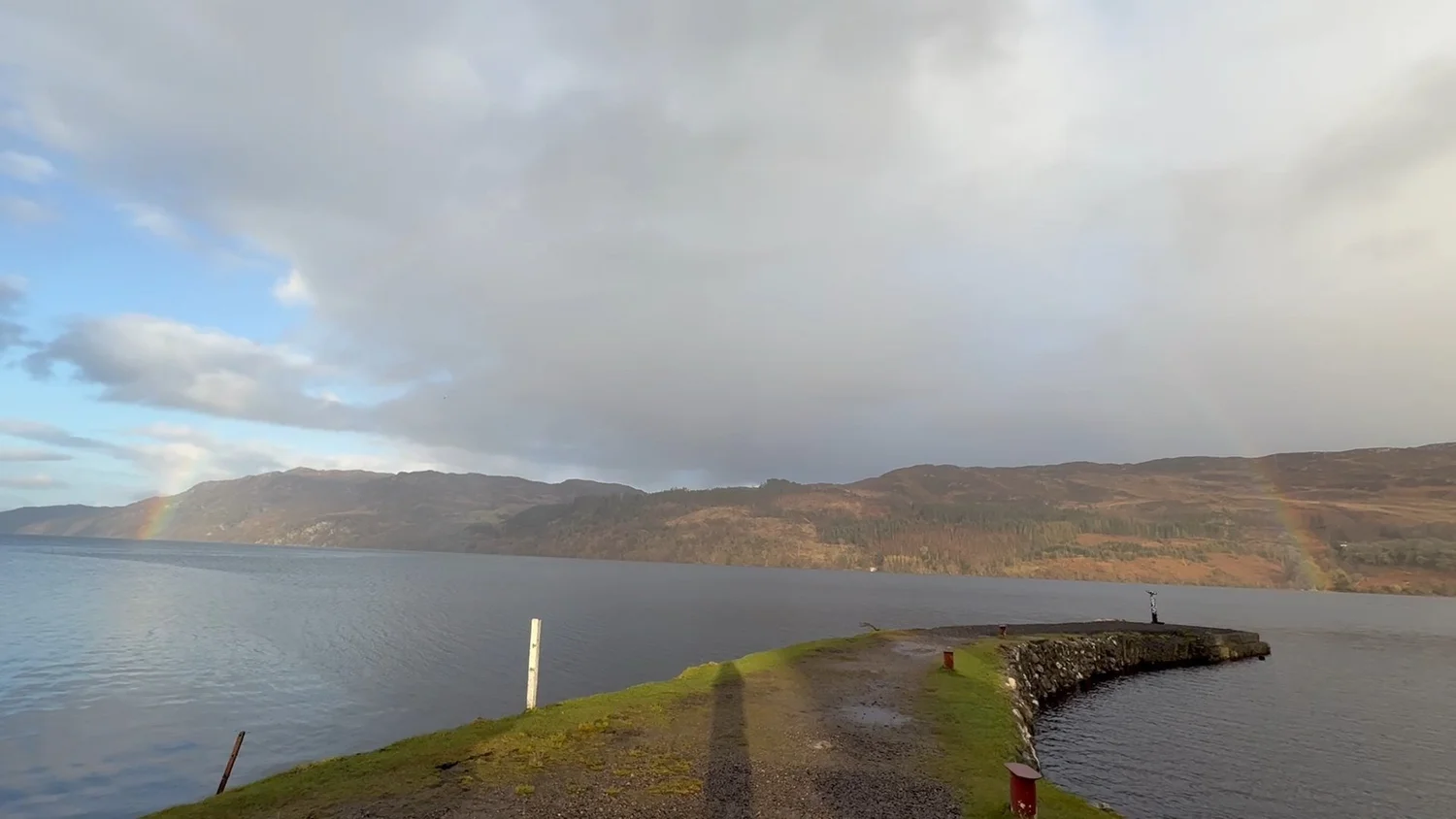
At the southern end of the loch, we arrived in Fort Augustus, where we spent two nights at Saint Benedict’s Abbey, a former abbey converted into lodging. Of all the places we stayed, it was probably the coolest. The building itself was part of the experience, not just a place to sleep between destinations. That first evening, a full rainbow stretched across the landscape, the perfect welcome to the Highlands.
April 10
Toward Kyle of Lochalsh
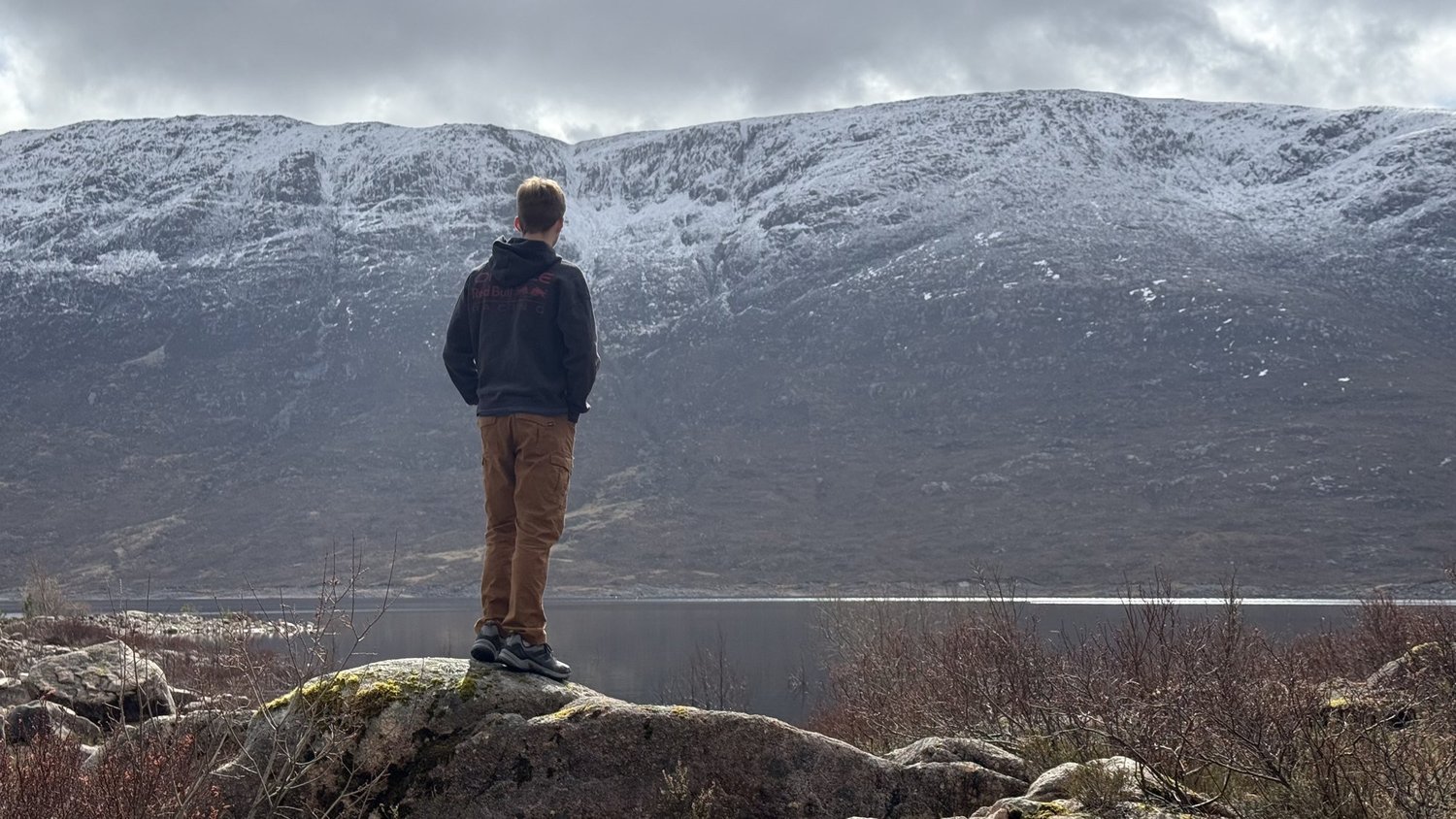
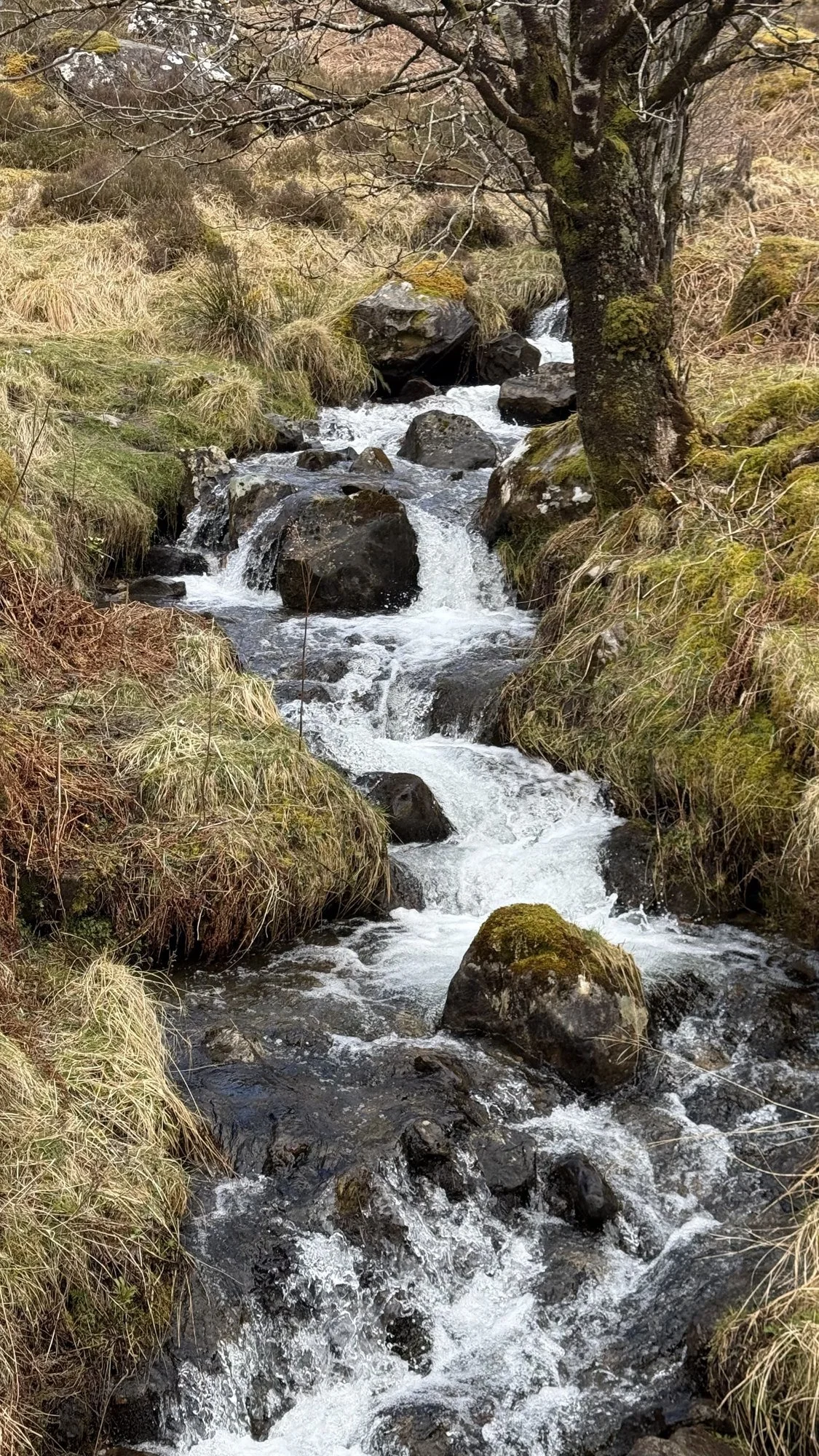
Our second day in the Highlands took us west toward Kyle of Lochalsh. We’d hoped to make it to the Isle of Skye, but between the stops, the hikes and the countless views that tempted us out of the car, we realized we weren’t going to get that far. Honestly, we didn’t regret it. This was the day we got out of the car the most, wandering into the hills and down to the lochs and streams whenever a view called to us.
One of our longer stops was Eilean Donan Castle. Set against the water and mountains, it looked like something out of a storybook, and the setting was every bit as memorable as the castle itself.
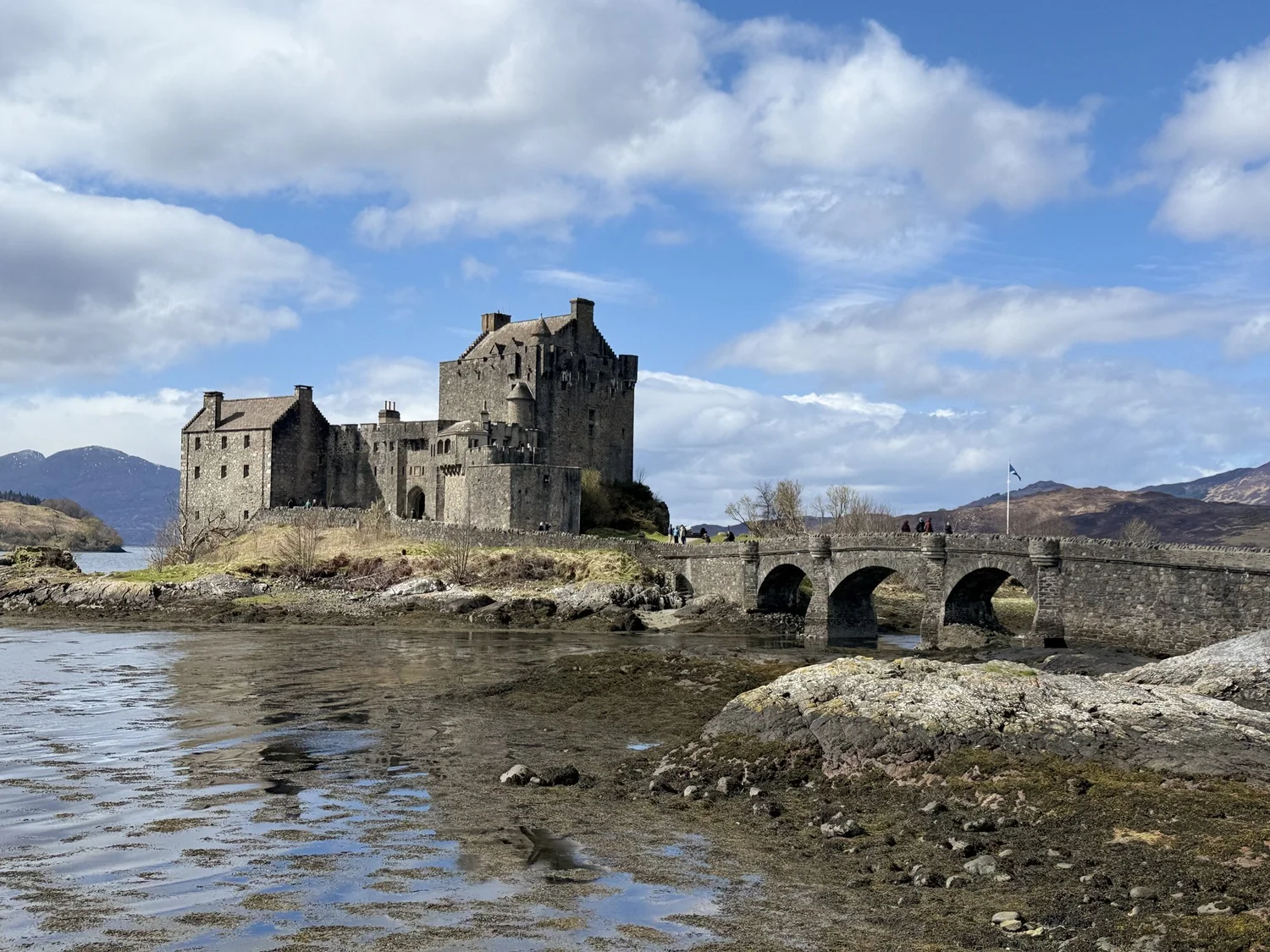
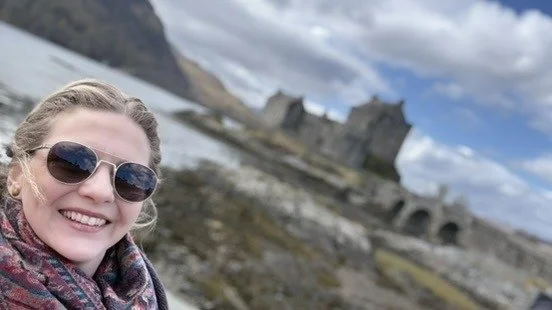
This part of Scotland also had a personal connection. My family name is Kyle, and kyle means a narrow strait or channel. Once we started noticing it, the name seemed to be everywhere. Finding it in the landscape, so far from home, felt like stumbling across a small thread connecting my story to the place we were exploring.
Skye will have to wait for another trip. Sometimes the best part of a road trip is pulling over because the view is too beautiful to pass by.
April 11
Glenfinnan, Glencoe and the road south
Our last full day in the Highlands took us toward Fort William and out to the Glenfinnan Viaduct. We’d hoped to make it all the way to Mallaig, but as often happens when we travel, we took our time and explored wherever the road led us instead.
The weather was perfect for the setting. As beautiful as these places must be under a blue sky, I think the low clouds, shifting light and mist make them even more spectacular. At Glenfinnan, it felt as though we were seeing the Highlands in their truest form.
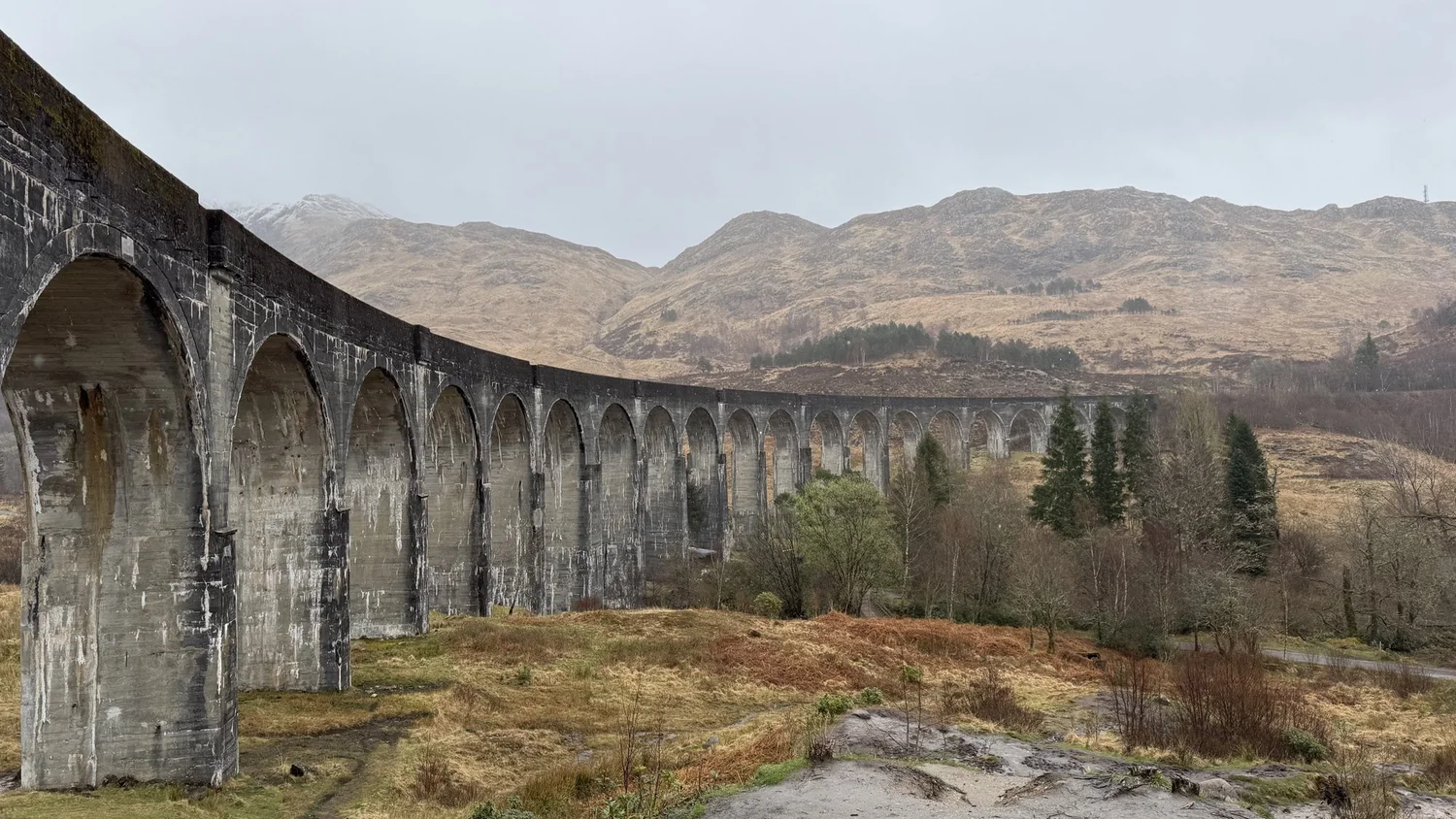
That morning, we’d seen the Ben Nevis range rising in the distance with only a little snow on the peaks. By the time we came back from Glenfinnan, a fresh dusting had settled across the lower Munros, another reminder of how quickly the weather changes here.
From there, we headed toward Glencoe, stopping at viewpoints along the A82. The landscape grew more dramatic with every mile: towering mountains, sweeping valleys and rugged slopes. From the road, we could see tiny figures scattered along the hillsides and trails, people out hiking through it all. It was easy to understand the draw.
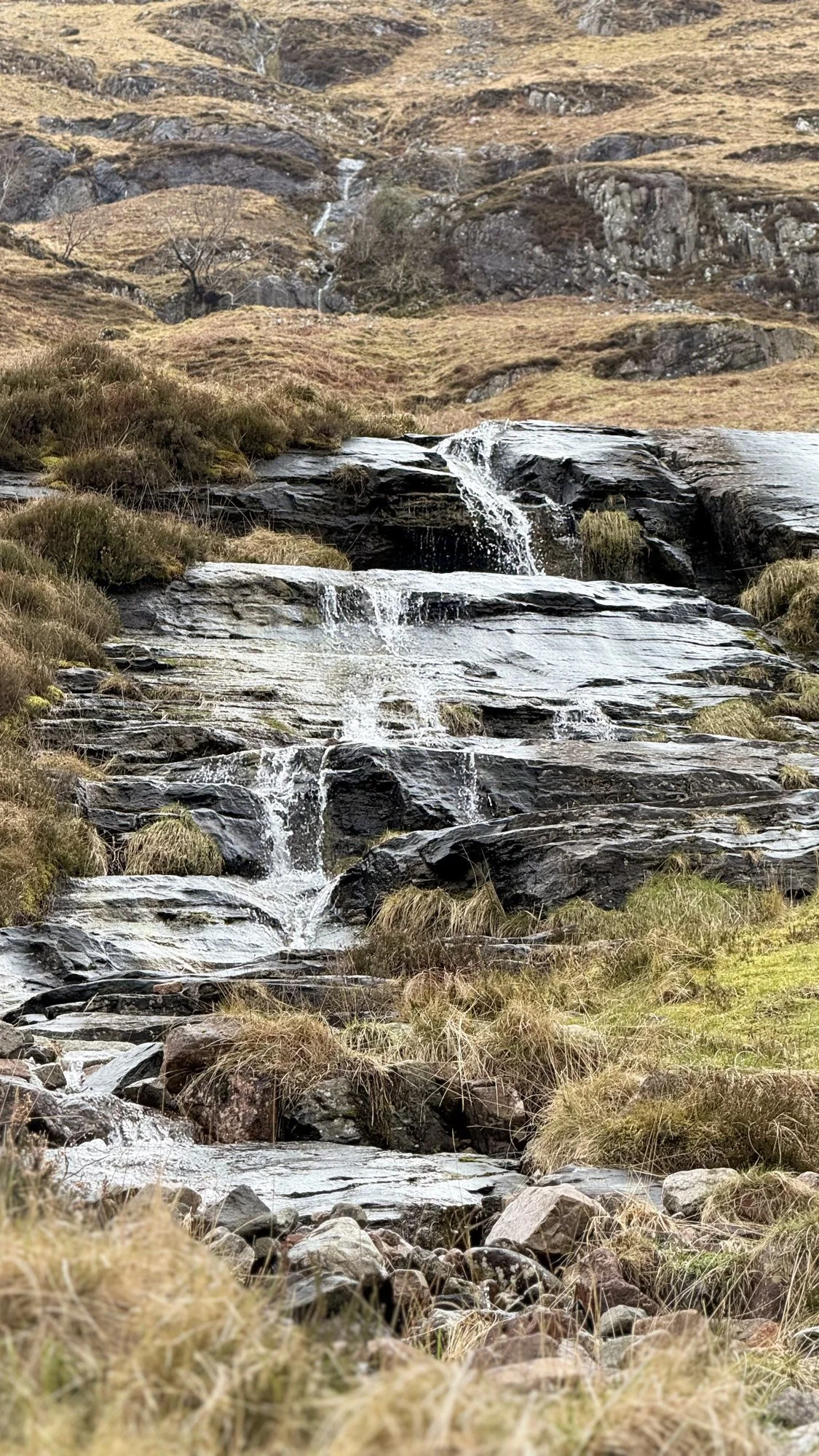
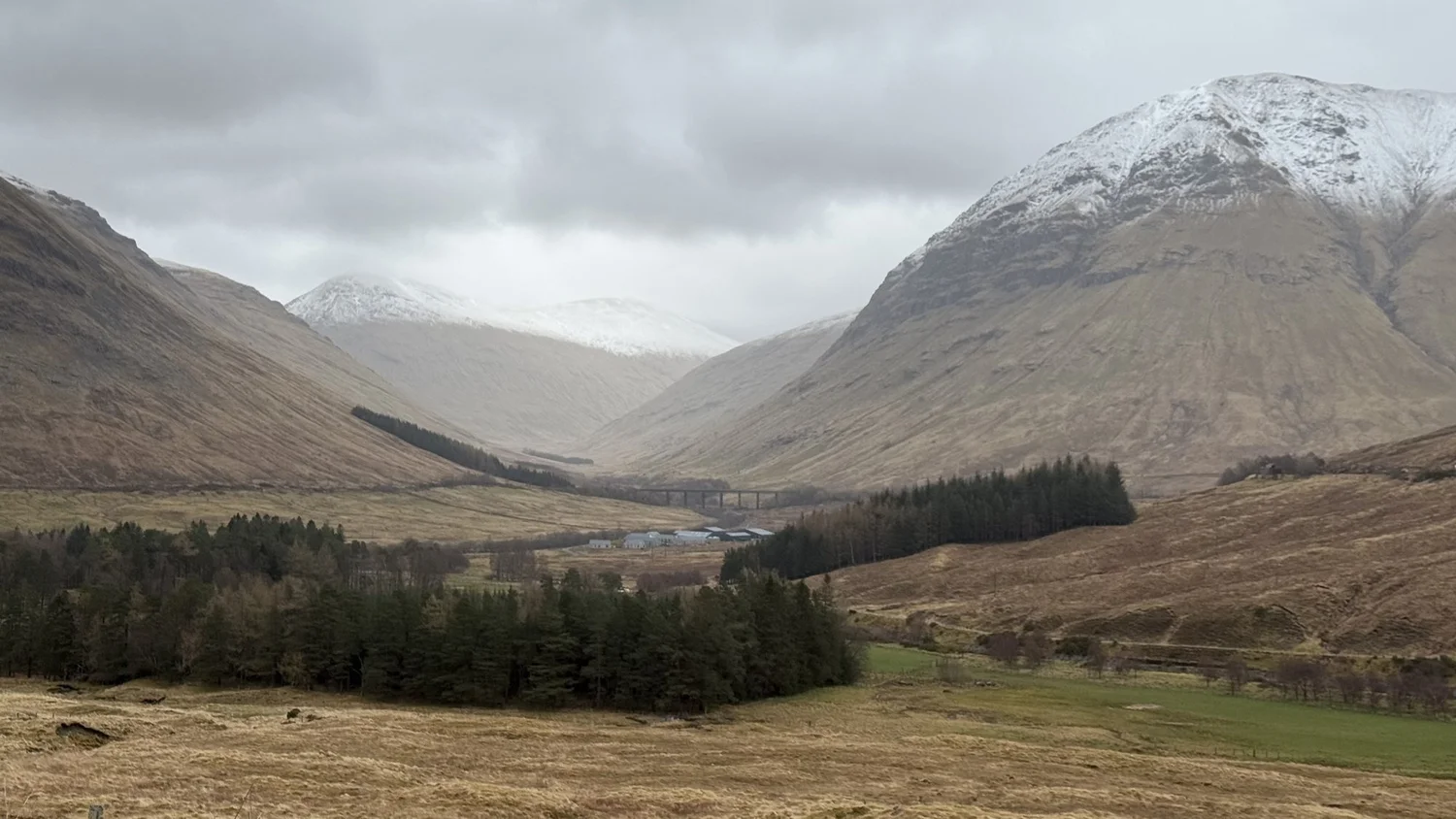
Little by little, we left the mountains behind. Our last night in Scotland was at a little inn in Crianlarich. We hadn’t made it to every place on our wish list, but we’d learned once again that the best parts of traveling often happen when you leave a little room for the unexpected.
Scotland was everything we’d hoped for and more: rugged, beautiful, steeped in history and always changing with the weather. It will stay with us long after coming home.
Our last day was a travel day, a necessary sacrifice, since we needed to drive back to Edinburgh to catch our train to London. The long ride gave me some really good sketching time, but I was, and still am, horribly behind on my watercolor journal. My goal is to finish it by the end of the year.